

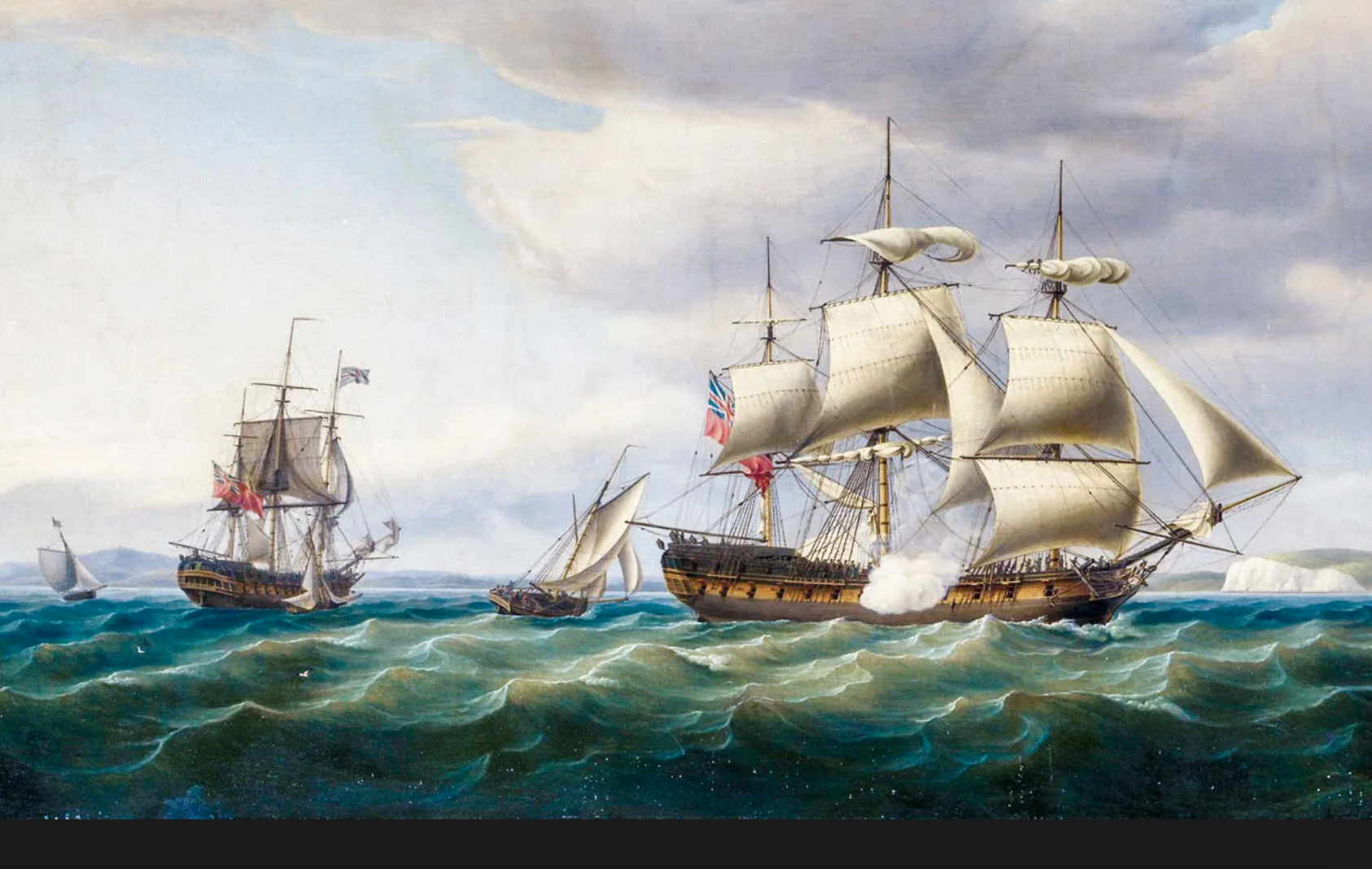
Whenever I begin a lecture or a walking tour, I refer to the origins of share trading. I often use the example of a theatre company or a shipping company to explain the difference between directors and shareholders. One manages the enterprise. The other provides the capital and hopes management uses it wisely.
From there, we discuss regulation, governance and investor protection. In many respects, the history of capital markets is the history of trying to align the interests of those running a business with those funding it.
Which brings me to the latest shipping company IPO: SpaceX. Or perhaps I should say spaceship company. The sky, it seems, was not the limit.
Four hundred years ago, investors were being asked to fund voyages to distant parts of the world. Today, investors are being asked to fund voyages beyond it. The technology has changed dramatically, but human behaviour perhaps less so.
The company that comes to mind is the East India Company. Like SpaceX, it captured the imagination of its age. It operated across a frontier few could access directly and promised opportunity on a scale that most individuals could never achieve alone.
The lesson from the East India Company is not about ships, spices or empire, it is about investor behaviour. As the company became increasingly important to Britain, commercial success, political influence and investor enthusiasm became intertwined. Its shares reflected not only performance, but national ambition and the belief that its future was almost limitless.
That sounds familiar.
What particularly interests me about SpaceX is not the rockets, the satellites or even Elon Musk. It is the structure of the investment opportunity itself. If Musk retains the overwhelming majority of the shares, while only a relatively small proportion is freely traded, the company can still command a valuation large enough to attract significant index demand in the future. Passive investment funds can never keep up with supply, and are the victim of magnified reaction from investors.
At the same time, sceptics face practical constraints. Shorting immediately after an IPO can be difficult. Natural sellers are scarce. The result is an asymmetrical market where the enthusiasts can buy immediately and the doubters often have to wait.
Which brings us to the first day of trading. The shares rose by around 20%. All commentators interpreted that as evidence of value creation. I am not so sure. Has the company become 20% more valuable in a matter of hours? Has a new rocket been built? Has a new technology been invented or humanity moved any closer to Mars?
Lets go back to basics and a lesson from the East India Company and investor behaviour, especially inside tracker funds. When investors cannot reliably value an asset, they often stop trying and instead look at the queue of investors. If more people want to buy than sell, that becomes the investment case. If nobody can sell, there is no queue of sellers, only buyers. The queue becomes the only valuation methodology, totally undermining the roles of analysts and fund managers in the City.
The East India Company promised access to global trade and SpaceX promises access to space. The absence of Tracker Funds in 1600 and slow-time trading actually kept a lid on reality. Now the sky is (not) the limit to test valuation methodology. Both operate on frontiers that are difficult to value using traditional methods. In both cases, investors are tempted to replace analysis with enthusiasm or tracking compulsion.
When I started trading, we were taught to value companies apart using metrics or spreadsheets. Then came the dot.com era and these metrics could not be applied. Investor supply and demand became the dominant market force for share prices.
So, is the capital raised being used to build the future, or merely to bid up the value for the founder? That was a good question in 1600. It may be an even better one today.
#tradesafe